INTERSTITAL SPACES
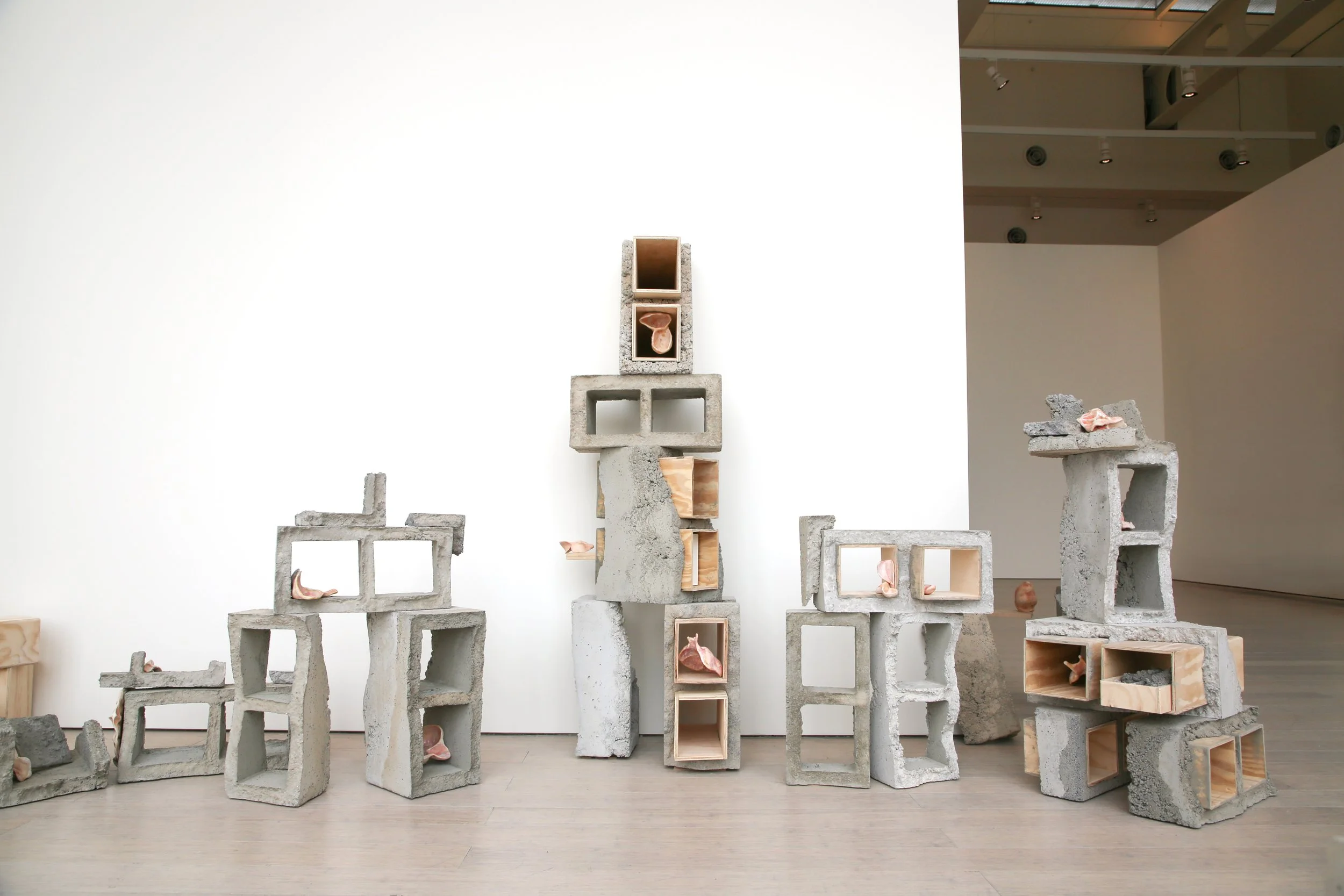
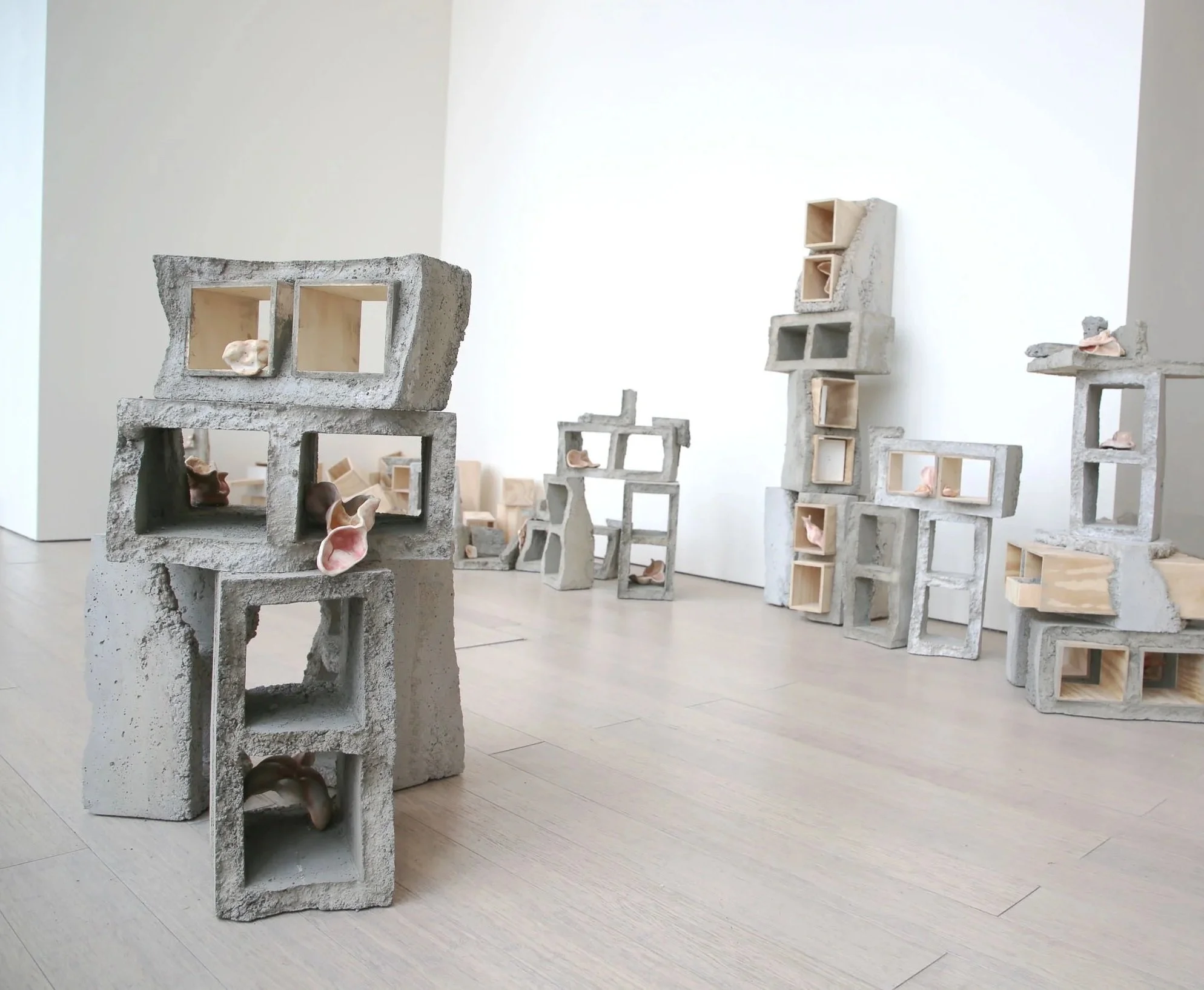
Interstitial Spaces, Porcelain, wood, and concrete, Installation dimensions variable, 2022
Interstitial Spaces is a sculptural installation that uses disability as a generative framework for reimagining bodily and architectural structures. Rooted in the experience of receiving a connective tissue disorder diagnosis, the project questions what it means to inhabit a body understood, medically and culturally, as improperly formed. Rather than treating this difference as deficit, the installation draws on crip theory to foreground instability, variation, and nonlinear structure as rich sites of knowledge and possibility.
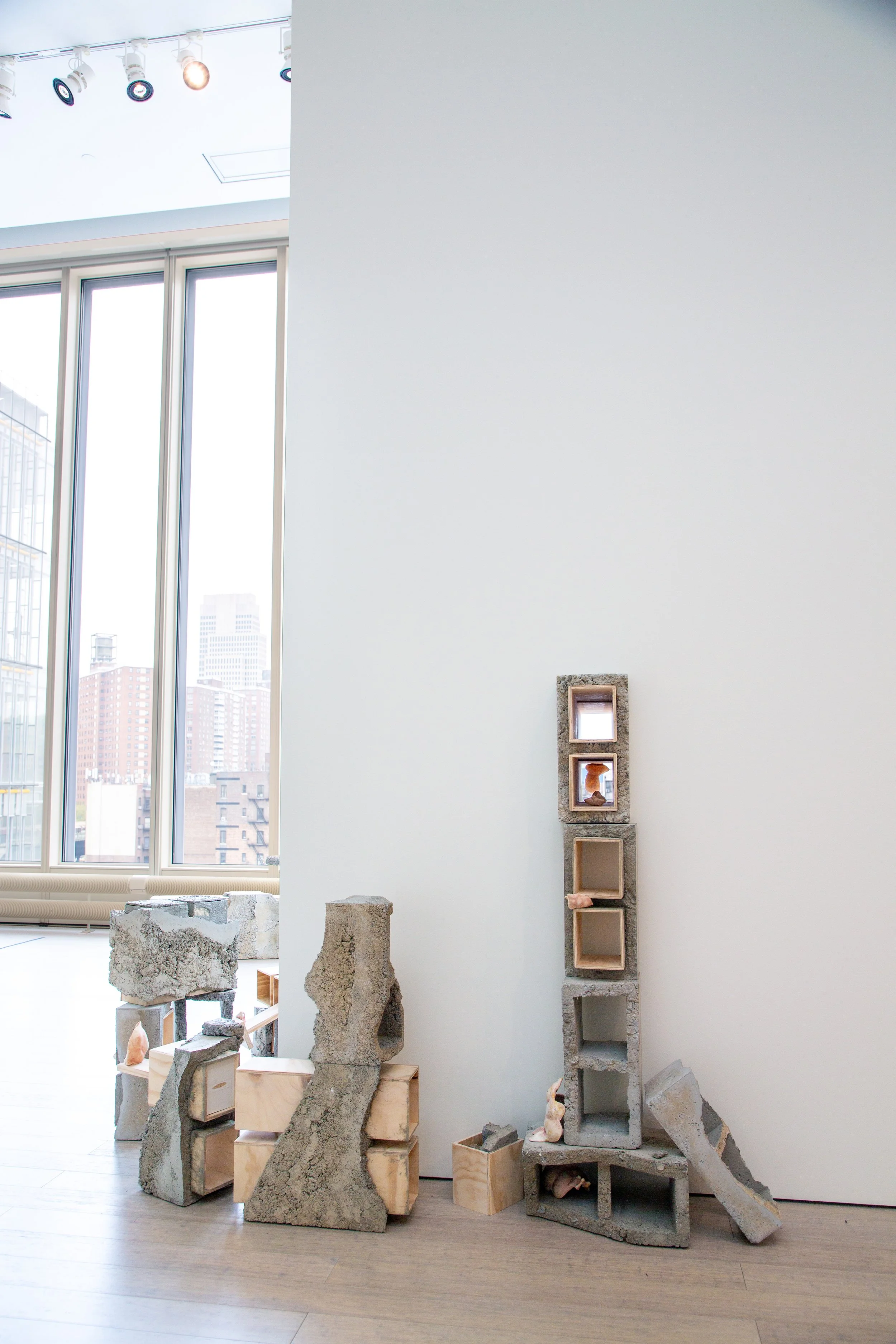
The installation features intentionally malformed cinderblock forms. Their undulating, asymmetrical surfaces and single-direction stackability position them as “crip objects”, forms that resist normative standards of utility and coherence. They refuse to behave like traditional building blocks and instead propose alternate ways of understanding structural integrity: as adaptive, contingent, and deeply tied to lived experience. These objects sit in a liminal space between functional and dysfunctional, mirroring the ambiguities of disabled embodiment.
Two central gestures within the installation intensify this exploration. First, a cast cinderblock extends directly through the gallery wall, creating a literal and conceptual portal. This breach creates a perceptual ruptures that often accompany chronic pain and disabled experience—moments when attention turns inward, spatial orientation shifts, and the familiar becomes strange. The portal interrupts the architecture’s logic, inviting viewers to inhabit a recalibrated relationship to space and to consider how disability reorganizes the built environment.
Second, an elongated cinderblock form—with its casting cavities left intact—traverses the installation like a connective channel. These stretched wooden voids echo the internal conduits of the body: tissues, vessels, and pathways that are often sites of instability in connective tissue disorders. Embedded within the elongated block are organelle-like porcelain forms, which act as materialized proxies for chronic pain. Because pain is pervasive yet invisible, creating visible “pain artifacts” allows the work to treat sensation as something that leaves traces—something recordable, interpretable, and structurally formative.
Throughout Interstitial Spaces, concrete, wood, and porcelain are combined in ways that destabilize conventional associations of strength, vulnerability, and support. The installation posits disability not as a limit to form but as a methodology for generating new forms that resist normative architectural expectations and instead open playful pathways for imagining alternative modes of embodied life.